Another year, another Assassin's Creed game. Except somehow it seems that I'm perpetually 2 years behind the curve here. Last year I played Brotherhood, and now a year later I've finally gotten around to playing Revelations. I guess the thing is, I have something of a love/hate relationship with Assassin's Creed. I love climbing about historical settings hitting up all the little icons on my map. However Assassin's Creed games always seem to know just how to frustrate the bejesus out of me. It seems to be the trend that, by the time I'm done with one game I'm frustrated enough that I wait a whole year to play the next one. And of course by that point, the latest title will have come out, thus perpetuating the 2 game backlog. At any rate, I knew going into Revelations that it had not been quite as well received as it's brethren. Now that I have completed the game, here are my own thoughts on the matter.
At first, I was actually pretty pleased with Revelations. One of my biggest complaints with Brotherhood was how restrictive it was. It felt like invisible walls were erected at seemingly random places all over the world. On the other hand, Revelations gives you unfettered access to pretty much the entire map and it's activities within the first hour or so of gameplay. However after playing the game, I feel like Revelations actually went too far the other way, at least for my taste. Personally I feel that the answer is somewhere in the middle. The player should have access to side missions, but they should also be encouraged to progress the story. Rather than throwing all the side content at you at once, I would prefer it be broken up a little bit. In this way it feels like your "reward" for completing all the side quests is moving on with the story, and unlocking the next area of the map. With that said, I actually feel like Brotherhood got the free roaming more right than Revelations, despite my issues with it. I just wish that divisions on the map had been more logical and better communicated.

As far as Revelations' gameplay goes, it is, unsurprisingly, pretty much identical to Brotherhood. At least on the surface. The two big additions are the hook blade and bombs. The hook blade creates some mildly interesting additions to how climbing works, but much of it seems cosmetic. The biggest difference comes in the form of being able to ride ziplines. Ziplines are certainly cool, but they really don't come up very often. Outside story missions, I only used them once or twice. As far as bombs, they seem like a fairly interesting addition, but I honestly just couldn't be bothered. The issue is that the bomb system was just too complicated to be worth it to me. It comes with an entire crafting system, three different categories of bombs, and customized bombs composed of three different parts. It's not wildly complex, I just never felt compelled to play with the system. I would use the odd bomb, but most of the time I felt that I would just rather stick with the mechanics that I had been using for the last 2-3 games.
This issue with the bombs is really indicative of a larger issue with the game on the whole, too. One thing I rather liked about Brotherhood was the way it encouraged you to use a wider array of tools to get the job done. Synchronization goals would have you experiment with different tools, and after exposing you to them the game would later give you situations where said tool would be ideal to use. In contrast, Revelations felt like I could just brute force my way through everything. I don't think I used poison more than once, and I'm pretty sure I never used the smoke bomb, both of which were staples in Brotherhood. I never really saw the need. It felt like I could play through the entire game using nothing but the wrist blade and throwing knives. On top of this, I never hired a single group of Thieves, Mercenaries or Romani. They were there, but they didn't really seem to serve a real purpose. It's like all these things are still in the game just because it doesn't make sense to remove functionality, but they didn't take the time to create situations where they would actually be useful.

This is kind of indicative of my feeling on the game as a whole. It feels like it was rushed. It feels like the shell of a game, like Ubisoft just took the engine from Brotherhood, modeled a new town, and shipped it. It's a good example of how important level design is. Good mechanics are great, but without a world that provides you with the proper challenges, they feel superfluous. That's not to say that Constantinople itself is poorly made, because it's a nice city. It just feels like everything about Revelations is lacking the spirit the previous games had. This is not Ezio's swan song so much as a placeholder to finish Altair's story and hold people over until Assassin's Creed III. This chapter of the story could have been skipped altogether and I don't feel like you would miss it. If anything, after the ending of Brotherhood Revelations is pretty anti-climactic. That's not to say Revelations is a bad game, it's just decent.
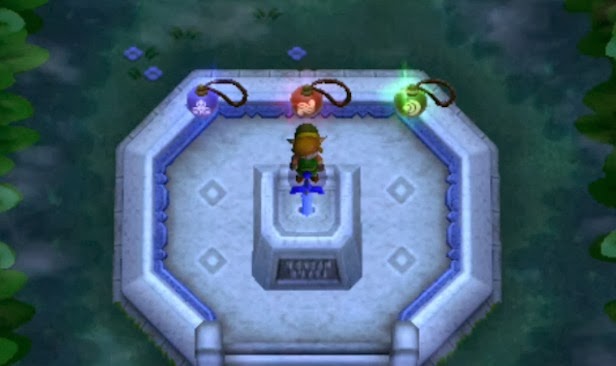
Back when Nintendo was just pushing the 3DS onto an unsuspecting world, there was a lot of talk about where the Zelda franchise was going. Skyward Sword had been in the works for a long time, and now Ocarina of Time was getting a pretty major facelift in the form of Ocarina of Time 3D. So naturally people started to wonder, if Ocarina of Time was getting remade, what was next? Many people have rallied long and hard for Majora's Mask, though unfortunately that has not yet come to fruition. However, it didn't take long before Shigeru Miyamoto himself piped up saying he would love to remake A Link to the Past.
Now I don't know if you know this, but I love me some Link to the Past, so I was pretty hyped about the possibility of a remake of my favorite Zelda game. Then along comes word that A Link Between Worlds was coming, and was a direct sequel to A Link to the Past. I was instantly interested in the game. I didn't even make the connection at the time, that this was our HD remake. We probably aren't going to get an HD Link to the Past. At first this realization made me kind of sad, but I think it's for the best. A Link Between Worlds is probably a better game than an HD Link to the Past could have been. A Link Between Worlds is probably the best Zelda game to date, in fact. Here are some reasons why:
1) The Controls
It wasn't that long ago that I talked a bit about the importance of good controls. They matter a lot. You can tell a game is going to be fun if you pick it up and just controlling your character feels good even without goals or challenges to overcome. A Link Between Worlds has this feel. From minute one you can tell just how responsive Link is to your slightest nudge on the circle pad. He rockets around Hyrule at what seems like a blistering pace, and yet it never feels like he is out of control. He goes where you want, when you want. It seems simple, but it goes a long way when you can't blame stupid deaths on bad controls.
Of course a lot of this precision comes from the simple fact that the 3DS uses the circle pad to control Link's movement. If you think about it, just about every 2D Zelda game has always used the d-pad for character movement. This of course comes with the inherent disadvantage of only being able to handle 8 different directional inputs. So it's not really a big surprise that given the 360 degree movement of the circle pad, A Link Between Worlds feels like a breath of fresh air. Granted there was Four Swords Adventures on the GameCube, and it's controls never really felt quite so awe-inspiring. But we won't talk about that.
2) The "Magic" Meter
One of the things that A Link Between Worlds does best is making little changes that challenge the Zelda norm. Zelda has been around forever, and there are so many mechanics that have just existed from game to game, virtually unchanged in 20+ years. One of the biggest, but subtlest things A Link Between Worlds changes is the way it handles items, and more to the point, ammunition. You don't have to collect bombs or arrows or magic. Every item in the game uses the same resource; a "magic" meter which regenerates at a pretty rapid pace.
This actually has a pretty profound effect on gameplay. At first I was a little dubious, because it means for example, I can only shoot x arrows in y period of time. But gradually I realized that because this meter always refills itself, I had so much more freedom to use items. There is no saving your magic so you can use the Fire Rod to solve puzzles, or holding on to arrows to use them on the boss. You can throw bombs at random enemies all day and it's all good. It makes combat seem a lot more free to be done how you see fit, rather than relying on your sword to do everything. It cleans up the UI nicely, too. It's interesting, because I noticed a similar effect with the more freeform magic system in the Adventure of Link, but for the past 25 years the series has steered away from that.
3) Truly 3D 2D
Link Between Worlds occupies this intriguing space wherein it's a game which is fully rendered in 3D, but it plays like a 2D game, but requires you to think in three dimensions. It's kind of amazing really, that with 3D games having existed for over 15 years, it's a game masquerading as 2D which nails the third dimensional game play better than most "proper" 3D games. Never does a puzzle say " look up, there's a switch on the ceiling you can't see, LOL 3D". Instead it just takes advantage of the fact that in 3D you can so easily render multiple elevations, change perspectives, transition to the backside of a wall, whatever.
The top down view means you can always see exactly what the designers want you to be able to see, but it's still a world where you can merge with and walk around on the walls and smoothly transition between different elevations. I mean sure, we've been pushing blocks onto lower floors for a long time now, but A Link Between Worlds forces you to look at every room in an entirely different way. Every wall has the potential to be a road. The only other game I can think of that has a similar feel to it is Portal. And I think we all know that comparing anything to Portal is pretty glowing praise.
4) The Nostalgia Dance
Let's be real here for a second. I was always going to love a Link Between Worlds. My body is physically unable to dislike a sequel to A Link to the Past just because of my history with the game. So as you can probably imagine, a Link Between Worlds is nostalgia overload for me. The sounds enemies make when you die or when you pick up rupees made me happy. The orchestrated songs from Link to the Past delighted me. The almost identical overworld map gave me all the feels. How many times have I made the journey between Kakariko Village and the Eastern Palace? This time felt little different from when I was 6. It feels like every nook and cranny of A Link Between Worlds was constructed with a nod to fans of A Link to the Past.
What's more impressive though, is that underneath all the similarities, A Link Between Worlds is it's own game. Every iota of this game perfectly maintains the feel of it's predecessor, but it's a brand new experience. The motto of this game may as well be "the same, but different" because it's stamped all over the place. Despite the similarities it still delivers on substance for returning players, and it's still hugely enjoyable for those who are not. The game is great with or without the nostalgia factor, and the fact that Nintendo has managed to strike such a great balance is pretty impressive. Although with that said, I'll never forgive them for changing the way the tempered sword sounds.
Today I'm going to tell you the secret to making a good video game (or at least, one that isn't text/menu based). The trick is to make a game that feels good to play. The story isn't that big a deal, the mechanics are trivial, the graphics and audio are on the sidelines somewhere. Everything else plays second fiddle to having a game with good controls. Many people don't realize it, but subtle nuances in the way a character responds to inputs can make a huge difference on just about every aspect of a game. You've probably played at least one game wherein as soon as you picked up the controller, your character felt sluggish and cluncky and just wrong. From minute 1 you lose most if not all interest in the game. Even when a game does have good controls, subtle decisions as to how those controls work can change a lot about how the player will play that game.
I mention all of this because over the past couple days I've run into two games that are perfect examples of the effect that small control nuances can have. Specifically, the games I am referring to are Castelvania: Circle of the Moon and Castlevania: Harmony of Dissonance. Both games star whip-wielding members of the Belmont Clain, who have almost identical ability sets. Both are games on the Gameboy Advance, and thus have the same buttons available to them. What's most interesting though is that while both games have control issues, they are almost opposites in where those issues lie. In short, Circle of the Moon controls a lot more like the older Castlevania games - it's very slow and forces you to be a bit more premeditated about how you attack. Harmony of Dissonance on the other hand feels a lot more like controlling Alucard from Symphony of the Night - it's much faster, but the actual whip control is only so-so.

When it comes to controlling a character who wields a short ranged weapon, I am of the opinion that having precise control over your character is very important. Being locked into a jump arc sucks, especially when you are plunging headlong into the bad guy because you can't shoot him from the other side of the screen. Circle of the Moon manages whip controls pretty much perfectly. The whip is a little slow coming out, but this is a conscious choice that existed in all previous games in the series as well. It forces the player to be a bit more careful, and adds a bit of skill to whip use. Harmony of Dissonance adjusts the delay to the end of the attack, opting for a whip that's faster out of the gate, but doesn't feel anywhere near as satisfying to score hits with. More importantly however is that Harmony of Dissonance affords the player absolutely no mid-air control after your whip has been used. This means that if the enemy alters course after you jump or you realize your jump arc has you bumping into the baddie's big toe, you have no choice but to eat some damage. This one fact annoyed me more than anything else in the game, from start to completion.
Another interesting comparison lies in the way dashing a jumping works. When it comes to dashing, Harmony of Dissonance is a hands down winner. Circle of the Moon requires the player to double tap left or right in order to dash, meaning that you frequently find yourself walking when you really need to run. This further means that you often will not jump as far or as high as you expected, as dashing increases the distance of both of these. On the other hand, Harmony of Dissonance has movement controls working quite well. At any time the player can hit R or L to dash right or left respectively, making it very easy to quickly move in and out of range of an enemy. What's more, you can dash in the same direction in very quick succession, making basic movement feel significantly faster, more involved and just all around fun. However, Harmony of Dissonance does not allow you to dash-jump, which is very strange and somewhat jarring. When jumping, you go the exact same speed through the air regardless of whether you were dashing or walking previously. This feels really strange when you spend some time dashing, immediately slow down when airborne, and then resume dashing when touching the ground. You lose all sense of momentum, and it feels like jumps don't go as far as they should.

Ultimately, the two games are profoundly different in a lot of ways, I just found these control differences really interesting. Circle of the Moon is significantly harder and contains many enemies and areas that feel downright unfair, and yet it's whip combat feels much better simply because you can better control your movement through the air. Running around Dracula's castle is significantly less bothersome and more fun because of how dashing works in Harmony of Dissonance, and yet as soon as your feet leave the ground things start to feel kind of gross and weird. In terms of skill set, Nathan Graves and Juste Belmont are almost identical, and yet controlling them feels almost completely different.
Around this time last year, I played through Saints Row the Third, a game with some strokes of brilliance, and some less than ideal aspects. SR3 was something of a flagship that took the series from being a cult hit, to a wild and ridiculous mainstream success. People decided they were a fan of a Grand Theft Auto style game that didn't take itself seriously at all. Then came the DLC. Then the game's published THQ went bankrupt. Placed in a decidedly strange situation wherin you have a wildly successful franchise, but a publisher who has gone broke, Saints Row developers Volition were put in a pretty awkward place. The result is that what was once intended to be a huge DLC expansion ended up being the standalone Saints Row IV. Some people were thrilled, some people were skeptical. Most just wanted more Professor Genki. As ever though, the question is, is the game any good?
So let's start at the beginning. The story of the last 3 Saints Row games follows the growth of the Third Street Saints from a down and out street gang, to somehow becoming a mainstream media empire. In SR4's opening sequences you become President of the United States, witness Earth be destroyed, get placed into a Matrix-like simulation, acquire super powers, and plot the downfall of the alien overlord Zinyak. And yet, this is all done as a tutorial. Sure, it makes sense to introduce the plot through gameplay, but this stuff should be epic. How do you make defending The White House from aliens boring? Make it a tutorial that doesn't have much to do with the game at all. How do we introduce an open world game? Clearly with a hallway shooter segment. Oh by the way, about that shooting? This game is about super powers, so don't sweat it too much. Now here, have a boring, needlessly protracted turret segment.

Unfortunately, that's really the story of Saints Row IV. It inherits everything from Saints Row the Third, and the new is constantly at odds with the old. Saints Row the Third was about jacking cars, driving in the oncoming lane, shooting rival gangs with ridiculous missions, and doing silly activities. All of that is still in Saints Row IV, but what's the point? Why use guns when you can throw fireballs? Why steal cars when you can run faster on foot? That's cute, you can vault over fences... or you could jump 500 feet in the air, dive into the ground and nuke the fence into oblivion. Don't get me wrong, the super powers are definitely fun, there's no doubt., but being tacked onto an existing engine makes them feel significantly more clunky than in say, inFamous. At least until they throw you into a mission where you are without them. It's like they needed to do that occasionally just to justify guns even existing. At least they are pretty good about providing you with crazy vehicles or power armor to use part way through these segments so you don't miss your powers too much.
As far as the game flow, things feel a lot less coherent than Saints Row the Third, too. You can cruise around Cyber Steelport and do many of the same or similar activities as in real Steelport. Except now there is this whole quest system. Many of the games' quests involve exiting the simulation and talking to a crew member on your ship in the real world. Which seems to me like it doesn't really accomplish much aside from adding travel and loading time to your task. Sure there's a story/atmosphere/otherlameexcuse reason to do it, but let's be real here. Saints Row IV's story is not trying very hard, it's barely there. This game is about being the super powered president. I guess you could say it's making some kind of statement about escapism, but I really don't care. It's just another example of the world with super powers being at odds with the world without. I want to stay in the simulation and run up buildings, don't make me work so hard to get to the fun parts. It seems an odd thing to do, considering a big part of Saints Row the Third's appeal was always making the player feel like they are doing something worthwhile with their time.

As for the non-story quests, most of them simply involve doing the various activities strewn about Cyber Steelport. On one hand, this is pretty cool, because it means you have a little extra incentive/reward for doing said activities. Except I completed most of them before even getting the respective quests. As a result, the activities felt kind of soulless and unrewarding. Then I got a bit farther in the story, and unlocked a slew of rewards all at once. It just seems to me that the way the game is paced out is all over the place. You start out in a painfully linear/lengthy tutorial, pining for the open world. Then you get it, and are given a world with a million tasks and no incentives. Then you go back to the real world to do some story missions, and are rewarded with incentives in the cyber world. Surely at the very least, they should have restricted what activities you can do at the start a little more, and let the player narrow their focus a little.
What I will say about Saints Row IV though, is that when it get it right, it does it in style. The game is absolutely littered with delicious nerdy references. They feel out of place in a franchise that started as a gritty GTA clone, but I'll not say no to a tongue-in-cheek Metal Gear Solid segment. What's more, Volition once again flex's it's ability to create moments that are absolutely perfect for certain 80's songs. Those moments where you can just rock out and be awesome to a song that fits the moment perfectly.. Well they are absolutely stunning. Really, that's what this game is all about. It's about being awesome, being silly, being nerdy and being ridiculous. Saints Row IV definitely does all of this, but I would personally argue that Saints Row the Third did it better. I think it comes down to expectations. Saints Row the Third has tons of crazy in it, but it has a lot of the typical stuff, too. In contrast, Saints Row IV is thoroughly ridiculous from start to finish, and when everything is crazy, nothing is. The absurdity is still amusing, but not as much as it could have been.

So I suppose this is a long winded way of saying that Saints Row IV is a decent game, but has a lot of issues. I would say that while Saints Row the Third was a consistently good game, Saints Row IV consistently rocks back and forth between being amazing and being pretty mediocre. Considering the rocky publisher issues Volition experienced during development, it's not entirely surprising that it would end up being a little spotty in places. After all, this was a game that was never intended to be a sequel. I kind of wonder if it shouldn't have stayed as an expansion, it seems to me that a lot of complaints would evaporate had that been the case. In the end of the day though, I did have an overall good time with the game, and I will look forward to any future Saints Row IP. The next time I want to play with super powers though, I'm definitely going to play a game that was built from the ground up with them in mind.
Atlus has some pretty big shoes to fill these days. Over the past decade or so, public opinion of the Final Fantasy franchise (and Square Enix as a whole) as steadily declined. In a time where the JRPG titan can't seem to do anything right, a lot of people are turning to Atlus' Shin Megami Tensei series as the new Messiah. This, combined with a special offer from Nintendo meant Shin Megami Tensei 4 was always going to sell pretty well. However the question is, was Atlus able to perform with all eyes on them? With everyone expecting another legendary masterpiece like Persona 4 (or at least a game to fill the void of good Final Fantasy games) could SMT IV really hit it out of the park? Well, I've played the game for about 25 hours so far, and with that experience I am going to try and answer said question.
Now before I get into my actual analysis of the game, I want to talk a little bit about my experience with the franchise so far. I've played a few hours of Persona 3, but never really sat down and played it consistently. I've also played through Devil survivor, parts of which I really liked, other parts of which I really didn't. The reason I mention these things is because when I first played Devil Survivor, I thought things like the demon fusion, the game's difficulty, earning extra turns etc. were interesting or unique, when in reality they are staples of the entire Shin Megami Tensei franchise. Well, these things are all present in Shin Megami Tensei IV as well, and my opinion on them has not really changed much. Demon fusion is a pretty awesome mechanic, extra turns are really neat (when you get them), and the difficulty is a giant thorn in my side.

So let me talk on the combat/difficulty first, then. SMT games are pretty well known for being hard, and while I don't have a lot of games to compare, SMT IV seems to be no different. Now, I'm all for challenging RPGs, games that require strategy and planning, but there is a very fine line between challenging and frustrating. I would personally say that SMT IV has at least one foot over that line. I think it all comes down to the bonus turn mechanic. Basically, if you hit an enemy's elemental weakness, get a critical hit, etc. you earn a bonus turn, and same goes for the enemies. If you miss, hit an enemy's resistance etc, you lose 2 turns. On one hand, it's super satisfying to assemble a team of ice damage dealers to take out that boss that's weak to ice. You will probably decimate him. On the other hand, if you don't have that team of ice damage dealers, you will probably fail miserably. Heck, if you get unlucky and miss once or twice, you will fail miserably.
I personally feel that one of the big differences that makes this mechanic interesting in Devil Survivor but terrible in SMT IV is simply the information given to the player. In Devil Survor, you know before you even engage an enemy what their teams strengths and weaknesses are. In SMT IV this is definitely not the case. The first time you encounter an enemy you can only guess what their elemental properties are, and if you guess wrong the entire flow of battle turns against you. If it's a normal enemy then you can probably manage, though there's a good chance you will suffer enough damage to necessitate heading back to base to heal up. But a single wrong move against a boss will likely spell your doom. The only reliable way to beat bosses is to fight them once, use as many elements against them as you can to determine their weaknesses, then immediately reset and go put together a team to counter said boss. That isn't particularly strategic gameplay to me. There are just so many ways for your group to die that are outside of your control, and they are not limited to boss fights. It almost never feels like a death is because you messed up so much as you got unlucky or the enemy was cheap.

Beyond issues with the battle system, the game has plenty of other weaknesses as well. In short: The story moves slower than any other game I can think of. It took ~10 hours for anything of note to happen, many full games aren't even that long. Money is pretty hard to get your hands on, and yet doesn't seem to offer a whole lot besides convenience. I'd rather spend money to summon a demon that I could catch for free than buy a new sword that makes no perceivable difference in battle. You can only have one active quest at a time? Really? Navigating the "world map" is very awkward and usually involves visiting every location to find the one you are actually looking for. Once you leave the starting area, the game barely even tries to direct you any more. Leveling up feels kind of useless, as stat increases don't really make a noticeable difference in battle. The characters are pretty uninteresting and you'r "party members" seem completely superfluous. And that's all that I can honestly think about at the moment.
The game is definitely not all bad though. There are a lot of neat little things about it that kept me playing as long as I have. The demon fusion system is as interesting as ever, and I find it pretty enjoyable planning out the ultimate demon team (including reserves to swap in if one dies, or to heal outside of battle). SMT IV also has a system where demons can teach your avatar abilities, but if the avatar already knows the ability in question, it just gets stronger. I find it really satisfying to plan out demon fusions in order to get the most powerful demons, but also give the avatar +8 in the abilities I want. The app system is interesting, allowing the player to choose which bonuses they value most (extra skill slots, more demon reserves, regen mp while walking, convince demons to give you money, etc). Limiting the number of each type of consumable item the player can hold is a great idea in a dungeon crawler game. Any time you die you can return exactly to where you were (although, resetting the game seems to be faster). Furthermore, another interesting part of dieing is that you can pay to be revived with money, or you can use the 3DS' play coins, making SMT IV the first game I have personally seen to actually use play coins (though again, resetting is free). And finally, what little plot I have seen is fairly interesting.

All in all Shin Megami Tensei IV is a game that I want desperately to love, but so far haven't really managed to. There are periods where I have really enjoyed the game, but far more times where I was frustrated or lost or bored. At this point I have essentially stopped playing because I find I'm not particularly interested in wandering about trying to find where I'm supposed to go, dieing horribly, and then spending the next 3 hours grinding. Chances are I would find the game a lot more enjoyable if I were to drop the difficulty down, but the fact remains that "normal" mode doesn't on the whole feel like a particularly enjoyable game to me. I don't want to drop the difficulty because I find it too hard, I want to drop the difficulty because it feels abusive and punishing and unbalanced. But this is assuming I ever go back to it. On that matter, only time will tell.